
Sony Doubles Down on China: The China Hero Project's Third Season and the Console Wars in 2026
Sony's China Hero Project aggressively expands to invest in Chinese game developers, aiming to replicate the global success of titles like Genshin Impact and secure PlayStation's future in this key console market.
In the ever-evolving landscape of the Chinese gaming market, a fascinating battle is unfolding. Despite regulatory headwinds that have impacted mobile and PC gaming, the console segment continues its steady ascent, becoming a crucial battleground for industry titans. Sony, having carved out a significant presence since consoles were legalized in 2014, is now making its most ambitious move yet to solidify its future. The tech giant has officially relaunched and massively expanded the third season of its China Hero Project, a strategic initiative designed to discover, fund, and incubate the next generation of Chinese gaming talent. With a promise to invest over one million yuan in each selected title, this program signals Sony's deep commitment to weaving Chinese creativity into the very fabric of the PlayStation ecosystem.
Sony's Strategic Bet on Chinese Developers
The China Hero Project is far from a new endeavor; it began funding its first batch of games back in 2016. However, after a hiatus caused by the global pandemic, its return in the southwestern metropolis of Chengdu marks a new chapter. According to Sony's director of game production in China, Bao Bo, the scale of this third season will "far exceed" the previous two. The initiative is not limited to solo developers or tiny studios; it actively seeks out larger, more established teams, offering not just financial backing but also direct publishing support from PlayStation Studios. This holistic approach aims to transform promising concepts into polished, globally marketable PlayStation exclusives or timed console exclusives.
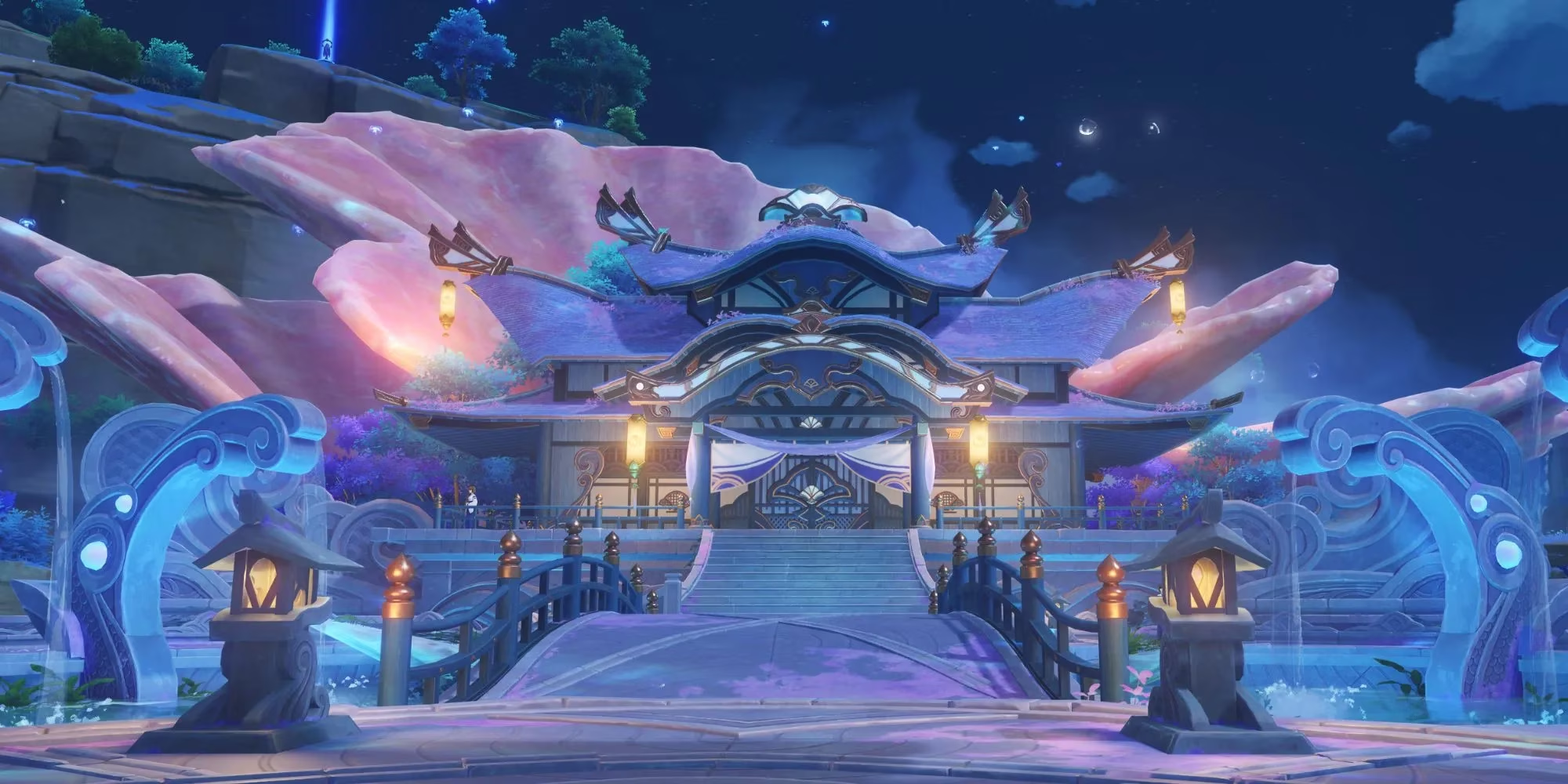
Analysts view this aggressive expansion as a direct response to Sony's past successes. "Sony is enhancing its production capability and games pipeline through M&A activities recently, and partnering with Chinese companies is part of its strategy," explains Chenyu Cui, an analyst at Omdia based in Shanghai. The undisputed catalyst for this focus was the monumental success of Genshin Impact, developed by Shanghai-based HoYoverse. Although this partnership occurred outside the China Hero Project framework, the game's dominance on PS4 and PS5 served as a powerful proof-of-concept. It demonstrated that Chinese-developed games could achieve blockbuster status worldwide while significantly driving hardware and ecosystem engagement. Cultivating smaller developers through the China Hero Project is seen as a high-risk, high-reward strategy that could unearth the next cultural phenomenon.
The Console Landscape: PlayStation's Growing Foothold
While console gaming remains a niche compared to the behemoth mobile market in China, its growth trajectory is undeniable. Sony has explicitly identified China as a major target for expansion, citing "unprecedented" demand in recent business overviews. The data supports the optimism. According to industry expert Daniel Ahmad of Niko Partners, Sony has built a solid market share for the PlayStation brand since 2015. The PlayStation 5, in particular, has seen remarkable adoption. Sales surpassed one million units in the console's early years, and China has rapidly risen to become the sixth-largest market for PS5 by active users—a dramatic leap from the PlayStation 4's eleventh-place position.
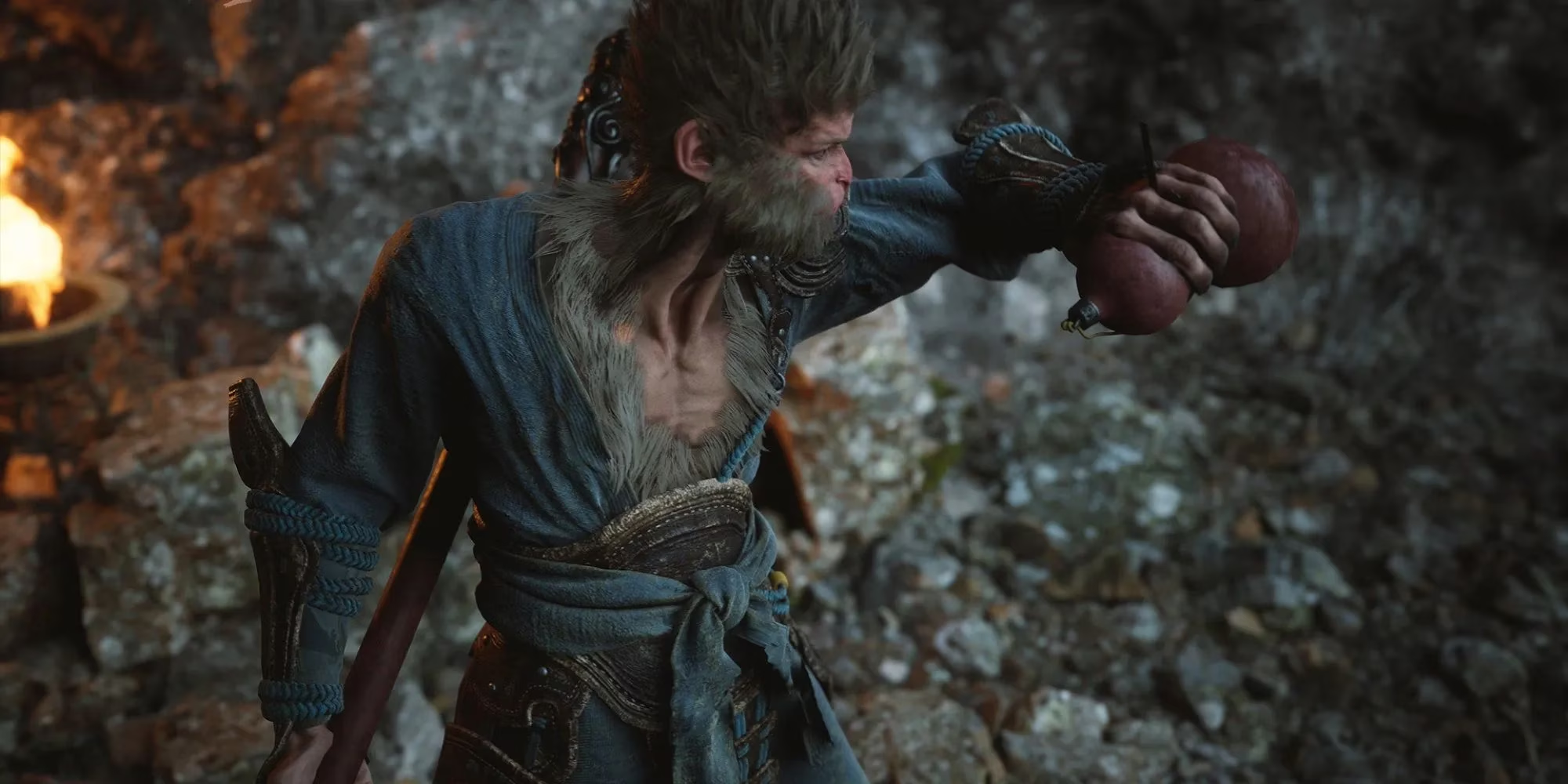
For Sony, the China Hero Project is a dual-purpose key. "It's one way that Sony is looking to tap into Chinese game development talent to increase the appeal of the PlayStation brand to Chinese gamers, while also offering a higher amount of unique experiences to its already established global player base," Ahmad notes. This strategy enriches the PlayStation library with diverse, culturally distinct content that appeals locally and intrigues internationally. Titles like the highly anticipated Black Myth: Wukong, while not part of the China Hero Project, exemplify the global excitement for premium Chinese-developed console experiences.
The Competitive Arena: Microsoft's Response and Nintendo's Throne
Sony's deepened commitment has undoubtedly sent ripples through the competitive landscape. Microsoft, through its Xbox division, is not standing idle. Recognizing the same potential, the company has ramped up efforts to attract Chinese studios with generous licensing agreements and development support. A significant move was bringing NetEase's popular title Naraka: Bladepoint to the Xbox Game Pass subscription service, providing instant access to a massive Chinese player base. Furthermore, Microsoft is exploring a different frontier: cloud gaming. By partnering with local telecom and tech firms like Youyun, it aims to leverage its Azure cloud platform to stream games, potentially bypassing some hardware barriers in the market.
However, in the race for market share, there is a surprising leader. The console war in China isn't just a two-horse race between Sony and Microsoft; it's currently dominated by a third player. The Nintendo Switch reigns as the undisputed market leader and best-selling console in the country. Its family-friendly appeal, hybrid portable design, and iconic first-party franchises have secured a broad and dedicated audience. Yet, Sony's strategy differs fundamentally. While Nintendo excels at selling its own hardware and software, Sony's China Hero Project is an investment in the long-term software pipeline and ecosystem strength. By fostering a generation of developers who create for PlayStation, Sony is building a foundation of exclusive content that could shift loyalties over time.
The Road Ahead for Chinese Gaming Talent
As we look toward the future in 2026, the implications of Sony's China Hero Project are profound. For Chinese developers, it represents a prestigious and well-supported pathway to the global console stage. The project offers:
🚀 Substantial Funding: Over 1 million yuan per project to ensure quality development.
🌐 Global Publishing: Direct access to Sony's worldwide marketing and distribution networks.
🛠️ Technical Support: Guidance and resources from the veteran teams at PlayStation Studios.
🎮 Platform Priority: A spotlight on the PlayStation storefront for potentially millions of users.
This initiative, coupled with Microsoft's parallel efforts, is creating a golden age for Chinese console game development. The world can expect to see more games rooted in Chinese mythology, history, and contemporary culture gracing their living rooms. While the competition for developer mindshare and player engagement is fierce, one thing is clear: the Chinese gaming market is no longer just a destination for selling hardware; it has become the most important crucible for discovering the software that will define the next decade of interactive entertainment. The console wars have evolved, and the winners will be those who best harness the creative power rising from the East.