
Genshin Impact Voice Actors Renew Calls for Diversity in Natlan Region in 2026
Genshin Impact's Natlan controversy over cultural appropriation and pale characters persists, with voice actors demanding better representation.
In July 2024, the reveal of Genshin Impact's next major region, Natlan, ignited a firestorm of criticism. Developer HoYoverse, known for drawing inspiration from real-world cultures, once again faced accusations of cultural appropriation and a lack of meaningful representation. The core complaint: despite borrowing heavily from African and Latin American aesthetics and mythologies, the character lineup was almost entirely pale-skinned. Now, two years later, in 2026, the echoes of that controversy still reverberate through the community, and the game's English voice actors remain at the forefront of the call for change.
Valeria Rodríguez, the English voice behind Sucrose, was among the first to publicly criticize the direction. In a tweet that would go on to gather over 2.7 million impressions, she demanded respect for the source material. "If you’re going to use real-world deities, respect them," she wrote. "If you’re basing off of real cultures, respect that. Bare minimum do some research and show some cultural appreciation." Even in the face of backlash, Rodríguez stood firm. "Seeing the huge response, both hateful and positive, means that I struck a chord. I’m done being silent. It’s 2024. We can all do better."
Rodríguez specifically highlighted the character Ororon, a wolf boy who appears to draw from the Yoruba supreme deity Ọlọrun. In the mythological MOBA Smite, Ọlọrun was portrayed with dark skin — an accurate and respectful interpretation. By contrast, Ororon debuted as yet another pale male character. "This is unforgivable," Rodríguez stated. "Look at what a sick job Smite did with their own interpretation! It's not hard!" Her post resonated across social media and triggered a wave of reactions from fellow voice actors.
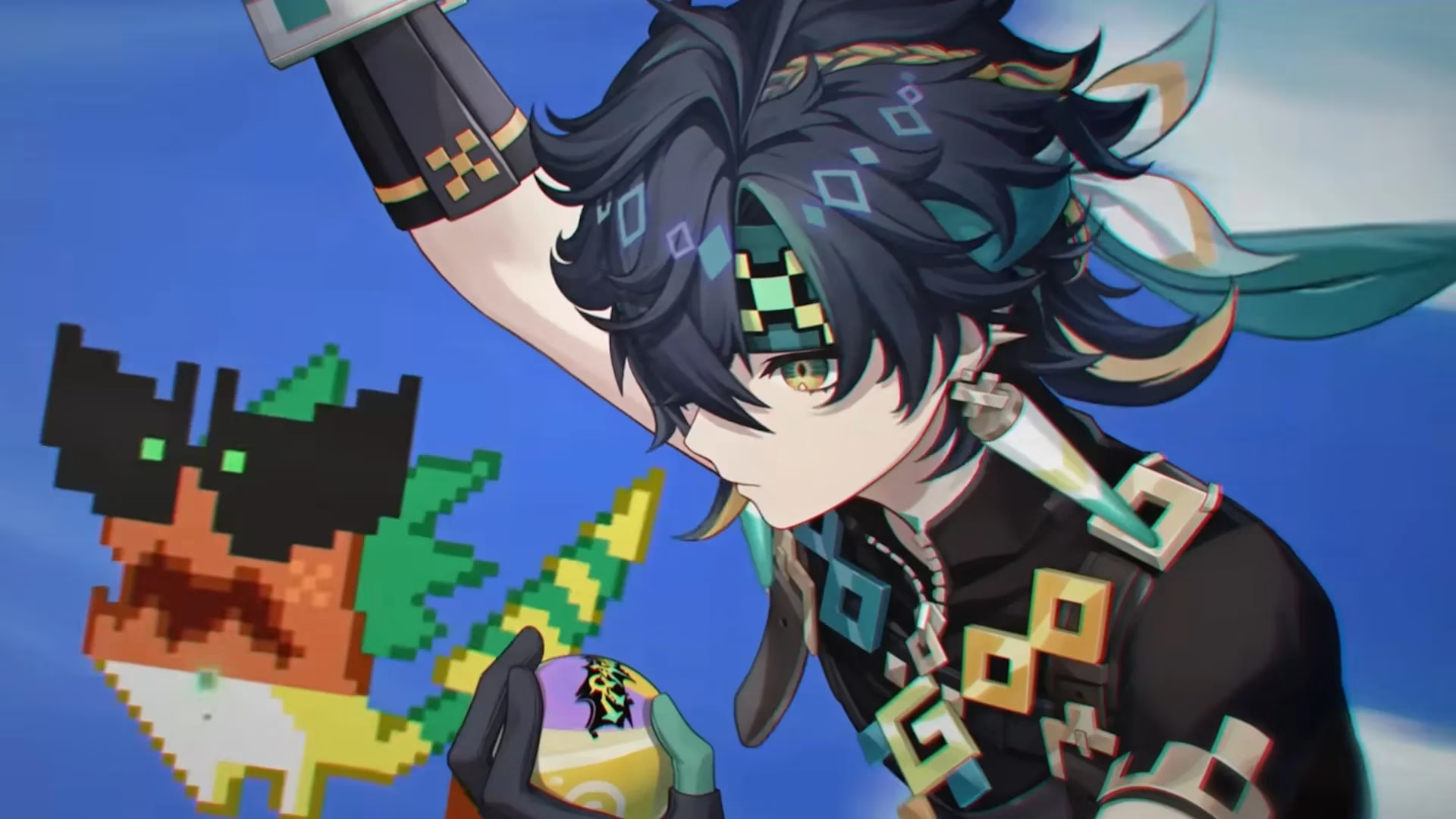
Alejandro Saab, the voice of Cyno — one of Sumeru’s few dark-skinned characters — expressed his dismay. "I didn’t know that's who he’s based on… Ah that’s bad," he said of Ororon. "You still got time to fix it." Anne Yatco, who voices the Electro Archon Raiden, put it plainly: "I really hope that a video game company listens to its fanbase when valid criticism is made multiple years in a row about the execution of its research and inclusion of elements/aspects of other cultures."
A cascade of statements followed. Khoi Dao, the voice of Albedo, argued that if a game bases a character on the supreme deity of the Yoruba religion and makes him look like "pale Sasuke Batman," fans are right to demand better. Zeno Robinson, who voices Sethos, posed a pointed question: "If even your base audience, the Chinese fans, are asking for better representation or characters with different shades of melanin, who are you making these characters for?"
Laura Stahl, who gives voice to both Xinyan and Barbara, called on fans not to attack the new cast members, as there was "virtually no way any of them could know what this was." Instead, the conversation had to be directed at the decision-makers. Allegra Clark, the performer behind Beidou, captured the sentiment succinctly: "It’s just disappointing when parts of the world that are so seldom reflected in media could be portrayed accurately."
Other actors spoke more broadly. Jenny Yokobori, voice of Yoimiya, declared that "it shouldn’t be a radical desire to want to see yourself reflected in the media you consume." Bill Butts, known for his role as Owlbert in Honkai Star Rail, emphasized, "Dark skin is beautiful. Don't let anybody tell you otherwise. Look at our beautiful and diverse backgrounds. Tell the wonderful stories of our people." Cory Yee, the voice of Gorou, shared a thread on how representation can change lives, urging fans to "stay vigilant, and stay empathetic."
Dani Chambers, who voices Nilou, directly praised a piece of fan art that gave the lion girl Xilonen noticeably darker skin. "Look how beautiful this looks!" she said. The fan-edit movement, with countless artists reimagining Natlan characters with deeper skin tones, became a powerful visual argument. Popular streamer Dish summed it up: "Fan redesigns are carrying the Natlan lineup I fear."
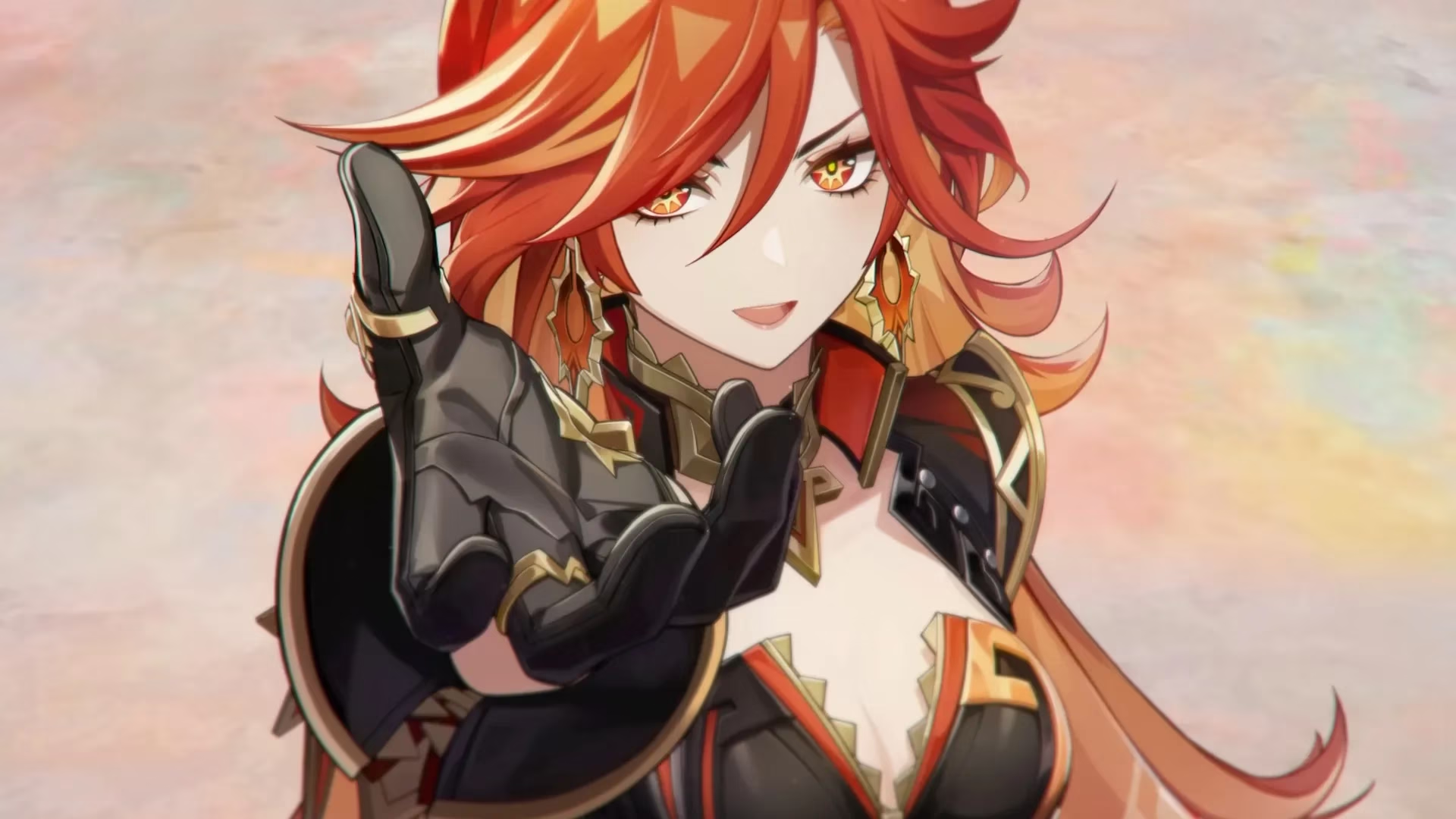
Compounding the disappointment, players noted a grim pattern: nearly every dark-skinned playable character in Genshin Impact ranks among the game's worst combat units. Dehya, Candace, and Xinyan are notoriously underpowered, while Cyno struggled to find a place in the meta. The strongest dark-skinned character is arguably Kaeya, a unit available since launch in 2020. Of the nine Natlan characters initially revealed, the one with the darkest skin — a small girl named Iansan — was first shown back in 2020, making the lack of progress even more glaring. "This pattern has led to debates about HoYoverse starving the beast," Alejandro Saab observed at the time.
By 2026, the debate has not faded. The same criticism echoes in community forums and social platforms, with many pointing out that HoYoverse markets Genshin Impact as a global title while consistently failing to reflect that global audience in its character design. Voice actors have continued to use their platforms to advocate for change, even as the game expands into new regions and storylines. For many, the hope is that the lesson of 2024 will finally be learned — that representation isn't just about aesthetics; it's about respect.