
Genshin Impact Team Building Essentials: Roles, Energy, and Synergy
Optimize Genshin Impact team building with elemental reactions and role synergy for maximum damage.
A traveler who blindly throws random characters into a party is like someone trying to tune a vintage radio without ever touching the dials—static and frustration are the only guaranteed results. Team building in Genshin Impact is the quiet art that separates a comfortable overworld stroll from a 36-star Abyss clear, and even as new regions and characters flood into Teyvat in 2026, the fundamental blueprint hasn’t changed. Getting your squad right means understanding who does what, how they feed each other’s bursts, and why elemental harmonies matter more than raw stats.
At the heart of every cohesive team sits a clear set of roles. The main DPS character is the star that hogs the stage, dealing consistent, heavy damage while being directly controlled. Think Eula’s lightfall sword, Hu Tao’s blood blossom barrage, or Xiao’s plunging annihilation. Their entire kit revolves around on-field presence. Next, the sub DPS operates like a silent second shadow—characters such as Xingqiu, Fischl, or Mona drop skills and bursts that persist after they leave the field, seasoning every main DPS hit with extra numbers. Finally, the support role heals, shields, gathers enemies, or amplifies damage. Qiqi, Zhongli, and Bennett all fall here, though many supports can moonlight as batteries or sub DPS depending on the gear you give them.
A general recipe that almost never fails looks like this: one main DPS, one or two sub DPS, and one or two supports. You can flip the ratios—two supports and a sub DPS, or two sub DPS and a single supporter—but you should avoid cramming two main DPS characters into the same party. That’s like trying to drive two cars from the same seat; neither gets enough road time to shine. Here’s a classic example:
-
Eula (Main DPS)
-
Mona (Sub DPS)
-
Fischl (Sub DPS)
-
Diona (Support)
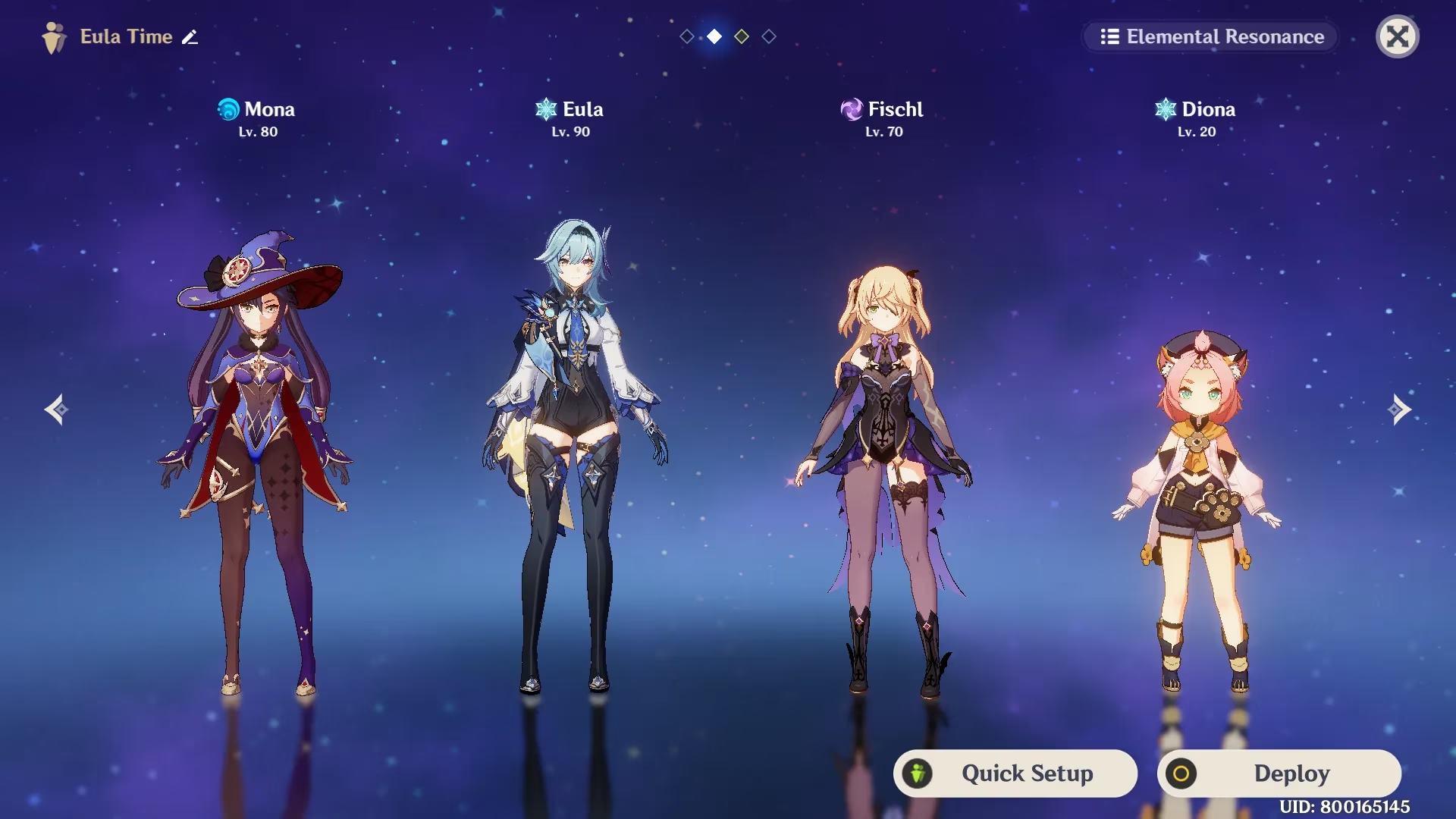
Why does this work? Because it’s built around elemental reactions. Eula’s cryo infusion mixes with Fischl’s electro to trigger Superconduct, shredding physical resistance. Mona’s hydro amplifies all that incoming damage, and Diona supplies cryo resonance and healing. Elemental reactions are the free multipliers that turn a modest hit into a room-clearing spectacle. Vaporize and Melt teams, like the infamous Hu Tao–Xingqiu duo backed by Bennett and Zhongli, milk these reactions on every charged attack. Never underestimate the power of two elements dancing together.
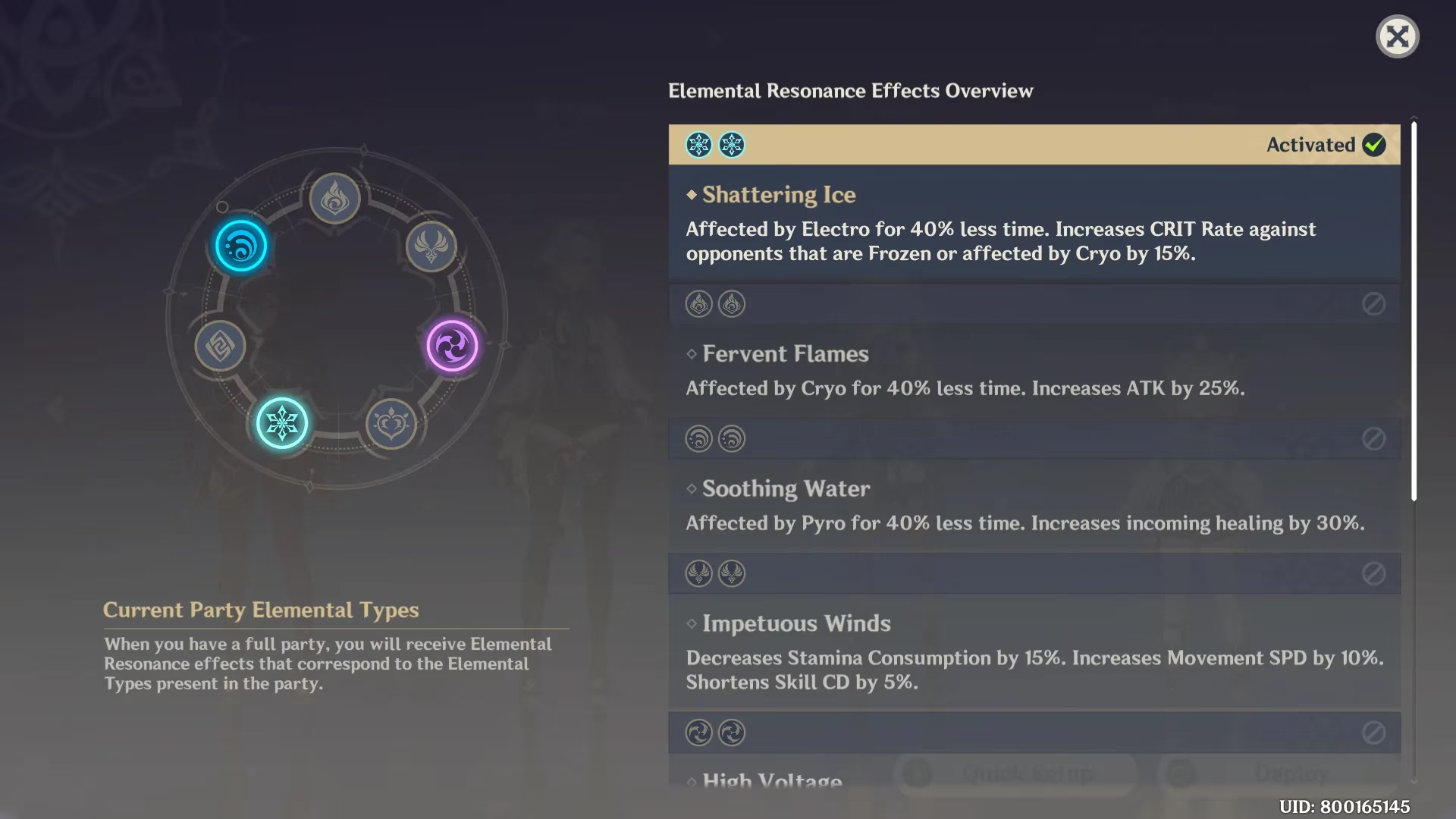
Then there’s the quiet elegance of elemental resonance. Having two characters of the same element in the party unlocks passive buffs. In the Eula team above, Eula and Diona share a cryo vision, granting the entire team a 15% crit rate boost against cryo-affected or frozen enemies. That’s a massive damage spike for no extra effort.
But resonance is only one side of the coin. Energy management is the deeper river that carries a team’s tempo. If a character’s elemental burst costs 70 or 80 energy, you can’t just wish it full—you need a battery. A battery is a support or sub DPS who generates a flood of energy particles with their skill, ideally matching the element of the hungry DPS. Energy particles work like a currency, and when the mint runs dry, your rotations stall. Eula’s burst requires 80 energy, so Diona’s sacrificial bow skill spits out cryo particles that cut the wait dramatically. Slotting her in transformed the team from a sputtering engine into a steady rhythm.
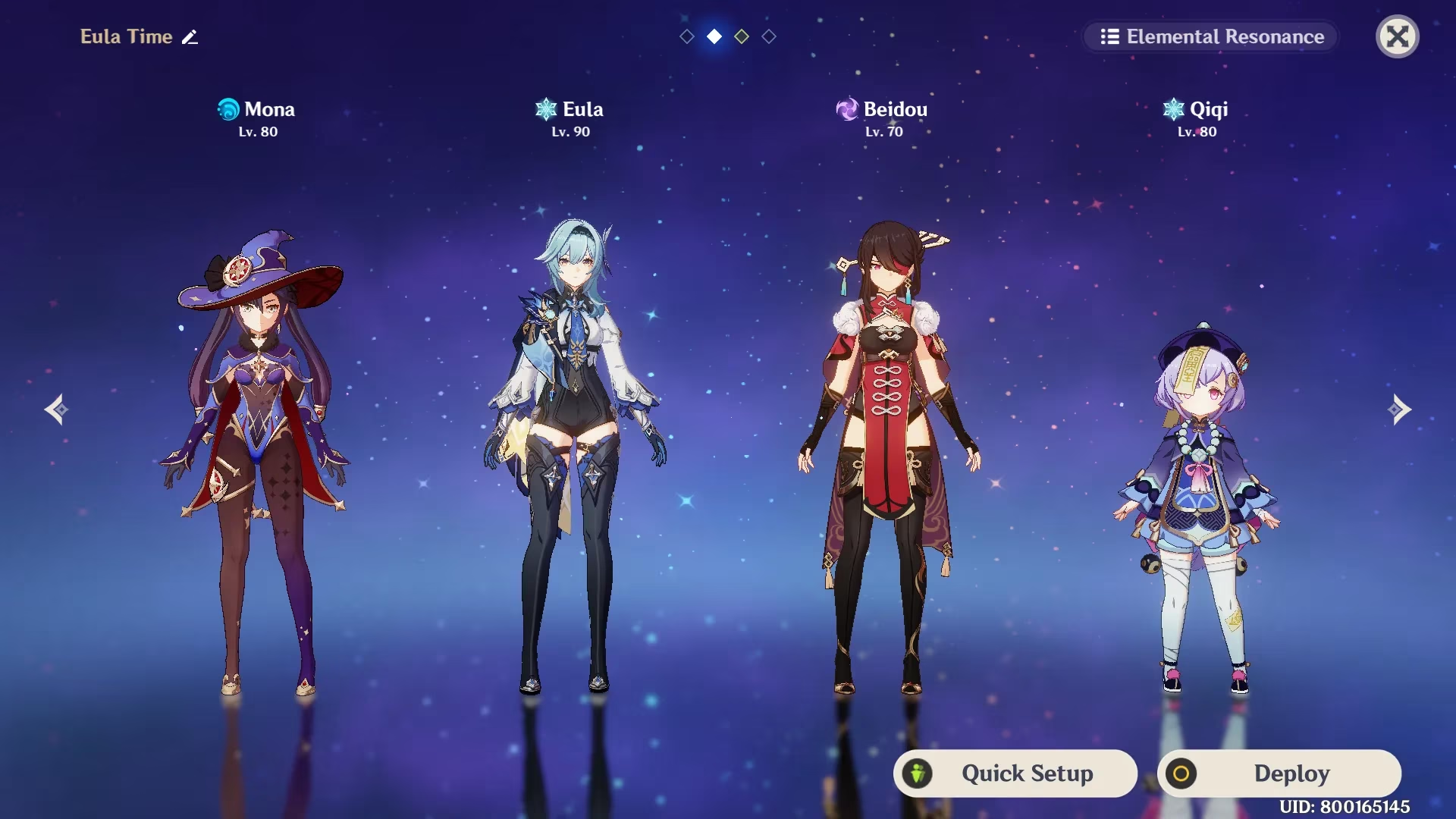
The messy early drafts of this squad tell the whole story. Initially, the team ran Eula, Mona, Beidou, and Qiqi. Beidou’s burst also costs 80 energy, applying Electro too erratically for consistent Superconduct. Qiqi generates zero particles, so both Eula and Beidou were starving. Mona couldn’t produce enough hydro energy to fill the gap either. The group felt like a clockwork mechanism where one rusty gear—the missing battery—froze the entire rhythm. Swapping Beidou for Fischl solved the Electro application; Fischl’s Oz stays on-field, pulsing damage and particles. Replacing Qiqi with Diona brought healing, shields, and that crucial cryo battery. Suddenly elemental bursts arrived on cooldown, reactions triggered like clockwork, and the team purred.
This evolution is the soul of team building. You don’t just copy a template; you tinker, test, and watch the energy flowcharts in your mind. The Spiral Abyss remains the ultimate proving ground—going in blind with a freshly stitched party teaches more than any guide. Even in 2026, as Dendro cores and Fontaine’s pneumousia mechanics layer on top, the core lesson stands: balance roles, marry elements, and keep the energy economy healthy. Master that, and you’ll never look at a character roster the same way again.