
Genshin 6.1 Hands-On: Miliastra Wonderland, Nefer, and the Rerir Mystery
Genshin Impact 6.1 Luna II adds Miliastra Wonderland sandbox tools and Nefer, a 5-star Dendro catalyst, redefining player-driven content and combat.
I won't lie—when I loaded into Version 6.1: Luna II – An Elegy for Faded Moonlight after the 2025-10-22 UTC+8 launch, I expected a routine update. Instead, Miliastra Wonderland opened up like an overstuffed treasure chest. It’s not just a new system; it feels like HoYoverse is handing the pen to players after years of asking. The patch brings a true UGC/sandbox toolkit, a fresh 5-star Dendro catalyst in Nefer, and major Archon Quest movement against Rerir. Let me tell you, this one has a different pulse.
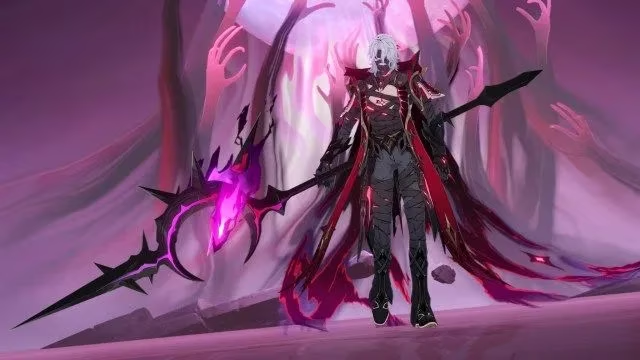
Miliastra Wonderland Feels Like a Second Teyvat
I’ve spent more time in the sandbox than I care to admit. The tools are genuinely expressive: stage creation, avatar customization, and the Miliastra Sandbox Editor let me scatter puzzles, combat encounters, and environmental obstacles like I’m decorating a particularly dangerous room. And no joke, it makes the old Serenitea Pot housing tweaks feel like arranging furniture while this thing builds entire neighborhoods.
Stage Creation: Design custom maps and challenges in single-player or co-op, then share them cross-server through an in-game browser.
Avatar Customization: Personalize a new avatar for Wonderland content, including skins and interactive props.
Sandbox Editor: Deploy puzzles, combat encounters, and obstacles with a flexibility that’s been missing from event-limited modes.
Official Stages: HoYoverse promised hundreds of curated stages at launch, with ongoing highlight showcases.
This is also the part where Genshin’s long-term rhythm might change. Since the 1.6 island events, a real level editor has been near the top of community wishlists. Event fatigue and repetitiveness have been loud complaints for years. Miliastra doesn’t just answer them—it hands the megaphone to the community. If the curation is strong, player-made stages could give the game a near-endless second life. The caveat, though, is that monetization mechanics, curation standards, and any resin integration remain unclear. Those are the threads I’m watching closely, because they’ll determine whether this becomes a permanent creative home or a shiny novelty that quietly fades.
Nefer Steps Into a New Dendro Lane
Nefer arrives as the 5-star Dendro catalyst, but calling them just another catalyst undersells the design. Their kit is built around Lunar-Bloom, a new reaction subvariant, and carries an intelligence-gathering mechanic that reveals unique lore tidbits and potentially boosts team synergies. That’s a first for the roster, and it makes Nefer feel less like a direct competitor to earlier Dendro units and more like a field researcher who also happens to hit hard.
For anyone planning to pull, the advice is familiar but worth repeating. F2P and low-spend players should monitor banner phases and rate-ups carefully, especially because competing banners and rerun schedules weren’t fully confirmed around launch. Saving around 70–90 pulls gives a realistic cushion for soft pity, and pre-farming Dendro boss materials and local specialties will make Nefer feel less like a waiting room exercise.
The Archon Quest Dares to Raise the Stakes
The story arc against Rerir has the same late-Sumeru climax energy I remember from older high-stakes chapters, but it’s more tangled. Arlecchino, Sandrone, Nefer, and Varka step into larger supporting roles, which hints that the Fatui influence is spreading into places I didn’t expect. I can’t shake the feeling that the old black moon lore threads seeded since 3.0 are finally tightening. I keep scanning boss arenas for visual cues, and I’m apparently not alone—forums are buzzing with theories about whether Varka will finally become playable or whether certain antagonists might follow Signora’s fate. None of that is concrete, but the speculation has its own gravitational pull.
Silvermoon Hall, Free Collei, and the Prep Checklist
Silvermoon Hall adds a new story and sidequest hub, with potential multi-part narrative and combat support from “The Damselette.” Progressing through it can unlock an exclusive namecard, while the seasonal event offers a free Collei for all eligible players. That’s a nice low-pressure reward for Sumeru fans.
If you want a smooth start, here’s my checklist:
🌱 Pre-farm Dendro boss materials and local specialties for Nefer’s ascension.
💎 Save Primogems if you’re targeting Nefer or possible reruns; 70–90 pulls is a sensible soft-pity window.
⚔️ Pre-clear weekly bosses so talent material synthesis is ready on patch drop.
🛠️ Watch for official Miliastra tutorials shortly before launch, especially if you want to publish polished stages early.
Why 6.1 Feels Like a Turning Point
Honestly, Miliastra Wonderland is more than an event—it’s a test of Genshin Impact’s long-term sustainability and player-driven storytelling. By pairing the most robust creation system the game has ever seen with a new Dendro five-star and expanded Archon questlines, Version 6.1 offers something for people who love stories and people who love building. The world feels a little more like ours now, because we can leave fingerprints on it. If the community takes that invitation seriously, this patch won’t just be a chapter transition. It’ll be the moment Teyvat learned to listen.
Data referenced from SteamDB can help contextualize how major content drops like Version 6.1 tend to ripple through player interest and engagement patterns, which matters when evaluating whether a UGC-heavy feature such as Miliastra Wonderland is positioned as a lasting “second Teyvat” or a short-lived novelty. By tracking historical activity swings, update timing, and broader platform trends, SteamDB-style metrics offer a practical lens for judging the staying power of big sandbox toolkits alongside headline additions like Nefer and a storyline escalation against Rerir.